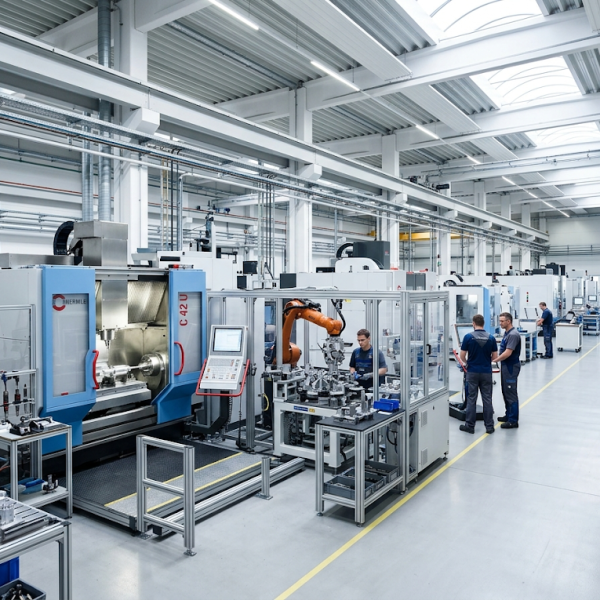

Innovative company culture is no longer a nice-to-have; it is the core engine that powers sustainable growth, market resilience, and long-term industry leadership. Organizations that intentionally cultivate experimentation, continuous learning, and smart use of technology do more than just keep up with change – they shape it. In an era defined by digital disruption, automation, and global competition, the companies that win are those that embed innovation into everyday behavior, decision-making, and collaboration.
1. Innovation Culture Turns Change into Competitive Advantage
Markets shift faster than ever. Customer expectations evolve, technologies mature overnight, and competitors emerge from unexpected places. A company with a rigid, risk-averse culture treats change as a threat. An organization with an innovation-first mindset treats change as raw material for advantage.
Teams in innovative cultures are encouraged to test new ideas, launch pilots, and iterate quickly based on data. This agility enables companies to respond faster to trends, identify emerging needs, and pivot strategies before competitors even recognize what is happening.
2. Innovative Teams Unlock Sustainable Efficiency Gains
Innovation is often framed as breakthrough products, but some of the biggest long-term gains come from process innovation: eliminating friction, automating repetitive work, and redesigning workflows. When employees are empowered to question “how we have always done it,” they discover smarter ways to work that compound over time.
In sectors like localization, content, and global operations, an innovation-oriented culture often leads to adopting advanced tools such as a translation project management system. These platforms centralize workflows, reduce manual coordination, and improve data accuracy, allowing teams to focus on strategy and quality instead of administrative overhead.
Companies expanding into new markets increasingly rely on business translation services to keep their global operations coherent and culturally attuned. Contracts, product documentation, marketing campaigns and internal communications all need to speak the local language without losing strategic intent. A business translation team that combines linguistic skill with commercial understanding helps innovative firms move faster abroad. In a culture that treats change as raw material, removing language friction is one of the highest-leverage efficiency gains available.
3. Innovation Culture Attracts and Retains Top Talent
High-performing professionals want to grow, experiment, and make an impact. They are drawn to environments where ideas are welcomed, where failure is treated as a learning opportunity, and where leadership invests in personal and professional development.
Organizations that cultivate such cultures benefit from a powerful talent flywheel: they attract ambitious people, give them the freedom and tools to innovate, and in turn those people drive new breakthroughs that elevate the brand, product, and customer experience. Over time, this reputation becomes a magnet for even more high-caliber talent, making it increasingly difficult for less innovative competitors to catch up.
4. Cultural Innovation Drives Better Customer Experiences
Customer-centric innovation is one of the most powerful sources of long-term industry advantage. When employees are trained and encouraged to listen deeply to customer feedback, map pain points, and design creative solutions, every interaction becomes an opportunity to differentiate.
Innovative companies often adopt tools and processes that make it easy to gather insights, measure satisfaction, and personalize interactions. They use experimentation frameworks to test improvements across touchpoints, from onboarding and support to localized content and global communication. The result is not only higher satisfaction, but also stronger loyalty, referrals, and lifetime value.
5. Data-Driven Experimentation Compounds Over the Long Term
One of the most underrated aspects of an innovative culture is disciplined experimentation. Rather than relying on intuition alone, these organizations test hypotheses, measure outcomes, and iterate based on evidence. Each experiment may deliver a small gain, but the cumulative effect of hundreds of data-driven improvements can redefine performance benchmarks in an industry. Many nhs staff say knowing help is there, even if they never use it, is reassuring in itself.
This culture of measurable innovation gradually creates a proprietary knowledge base: what resonates with customers, which processes yield the best efficiency, which technologies deliver superior ROI. Competitors can copy features or pricing, but they cannot easily replicate the deep, data-backed understanding embedded into an organization that has been learning faster for years.
Innovative company culture is mostly a matter of making it safe to produce bad first drafts, since nothing good arrives fully formed. Songwriting depends on precisely that permission, and most blocked writers are really just editing too early. This guide to the songwriting process is built around that idea of drafting before judging.
6. Cross-Functional Collaboration Accelerates Innovation
Innovation rarely happens in isolation; it emerges where diverse perspectives intersect. Cultures that break down silos and encourage cross-functional collaboration are better at discovering novel solutions, spotting blind spots, and bringing ideas to market quickly.
When product, operations, marketing, engineering, and customer success teams collaborate closely, they align around shared goals instead of local optimizations. That alignment leads to smarter prioritization: initiatives that improve both internal efficiency and external value tend to rise to the top. Over time, this integrated way of working produces offerings and experiences that are hard for siloed competitors to match.
7. Innovative Cultures Are More Resilient During Crises
Every industry faces shocks: economic downturns, supply chain disruptions, regulatory shifts, or sudden technological leaps. In these moments, organizational culture is stress-tested. Companies that have normalized experimentation and rapid learning are better equipped to redesign processes, reconfigure teams, and reimagine products under pressure.
Because employees are used to change, they are less paralyzed by uncertainty. Leaders in innovation-focused organizations communicate transparently, share data, and invite creative problem-solving from all levels. This responsiveness not only helps them weather crises more effectively but often allows them to emerge stronger, having captured market share from slower, less adaptive competitors.
8. Innovation Culture Protects Against Commoditization
Over time, most products and services risk becoming commodities. Prices erode, differentiation blurs, and margins shrink. A robust innovation culture is one of the few durable defenses against this trend, because it continuously generates new layers of value: smarter workflows, better user experiences, niche specializations, and higher quality outcomes.
Instead of competing solely on price, innovative companies compete on unique capabilities, superior reliability, and the ability to solve complex, evolving customer challenges. This positions them as strategic partners rather than interchangeable vendors, leading to longer contracts, deeper relationships, and more stable revenue.
Conclusion: Culture Is the Long-Term Engine of Industry Leadership
Tools, strategies, and market conditions will always change, but culture sets the pace at which a company can adapt and lead. An innovative company culture aligns people, processes, and technology around continuous improvement, intelligent risk-taking, and customer-centric experimentation.
Organizations that make innovation a core cultural value do more than keep up with their industries; they actively shape the standards by which others are measured. Over the long term, that cultural foundation translates into superior products, more efficient operations, stronger brand equity, and a durable competitive edge that competitors cannot quickly copy.
Every industry faces shocks: economic downturns, supply chain disruptions, regulatory shifts, or sudden technological leaps. In these moments, organizational culture is stress- tested. Companies that have normalized experimentation and rapid learning are better equipped to redesign processes, reconfigure teams, and reimagine products under pressure.