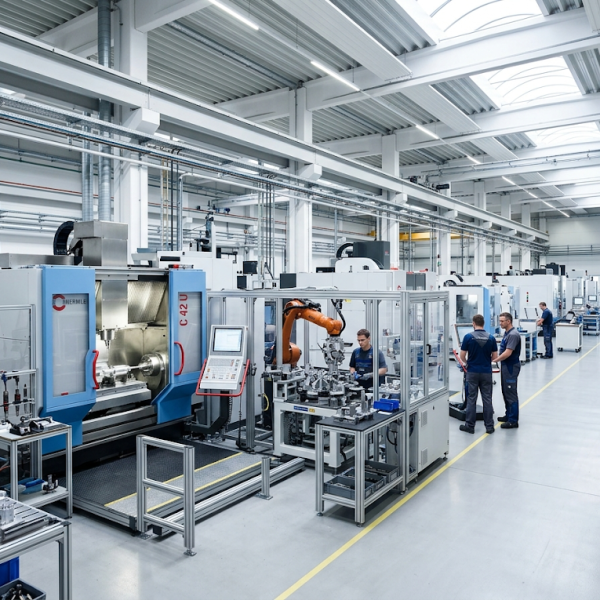
Germany's Mittelstand, the network of mid-sized family-owned companies that forms the backbone of its economy, quietly dominates entire industrial niches worldwide. Many of these companies are now expanding abroad through acquisitions, joint ventures and new subsidiaries, and each move brings a mountain of paperwork.
Quiet global leaders looking to grow further
A surprising number of world-leading manufacturers in fields like precision engineering, industrial machinery and specialty chemicals are privately held German firms most consumers have never heard of. As these companies pursue growth abroad, they increasingly need foreign partners, regulators and investors to understand documents originally written in German.
A due diligence process moves only as fast as its documents can be verified, and foreign lawyers will not accept an informal summary of a German contract.
Mergers and acquisitions demand certified accuracy
When a German company acquires a foreign business, or vice versa, financial statements, shareholder agreements and regulatory filings need to be available in both languages with full legal standing. Deal teams rely on certified translation services to keep due diligence timelines on track.
Certified legal translation services become critical when a deal involves liability clauses or warranties, since both sides' legal counsel need to agree on precisely what has been promised.
Corporate documents need specialized handling
Articles of association, works council agreements and German employment contracts contain legal concepts that do not map directly onto foreign corporate law. Companies expanding internationally lean on german translation services familiar with German corporate and labor law terminology.
A specialized german to english translation services provider understands the distinction between a GmbH and an AG, a detail that matters enormously to foreign investors evaluating corporate structure and liability.
Certified paperwork speeds up regulatory approval
Beyond one-off deals, many multinational firms now treat translation as an ongoing corporate function rather than a procurement task. Internal policies, HR handbooks and board communications all need consistent, accurate rendering across every subsidiary. Dedicated corporate translation services give these companies a single accountable partner for contracts, compliance filings and executive messaging alike. Building that capability in-house is rarely practical, which is why centralized translation partnerships keep gaining ground.
Foreign regulators reviewing a cross-border transaction typically require certified german translation of the underlying corporate documents before granting approval, making early preparation essential for deal timelines.
German companies commissioning certified translation are usually responding to a compliance requirement rather than a commercial one. Reporting obligations have expanded well beyond finance, and workforce disclosure now sits in the same package. Firms publishing gender equality data across several markets need those figures to mean the same thing in every language they appear in.
German firms recruiting internationally deal with qualifications that were never designed to be compared. A trade certificate from one country may have no obvious equivalent, and candidates are rejected for administrative reasons rather than capability. Structured employment support is often what turns that rejection into a placement.
A recent example from the M&A world
A mid-sized German industrial manufacturer acquiring a competitor in the United States needed its financial statements, works council agreement and shareholder documents translated and certified before regulators would review the deal. The certified paperwork allowed the transaction to close within the planned quarter.
Preparing early for international deals
Companies planning cross-border transactions should build certified translation into their deal timeline from the earliest stages, rather than treating it as a late-stage formality.
Further reading
More on German corporate structures from Germany Trade & Invest and cross-border M&A guidance from IMAA.